


Translations
In Shopware 6, you can translate all texts in your shop and make them available in multiple languages. For most fixed texts, such as the label on the shopping cart button, Shopware uses snippets that can be maintained in different languages. Individual texts, such as names or descriptions, can be translated directly in the corresponding settings.
Snippets
Customising snippets
System texts, such as the "Add to cart"-button, are customised in the snippets. You can find them in the Administration under Settings > Localisation > Snippets.
A separate snippet set is available for each language. By default, Shopware includes sets for English and German, which already contain all system texts in these two languages. Translations for additional languages are available as community translations and are described below.
To customise the system texts for a language, it is best to duplicate a base set as a starting point. For example, you can use BASE en-GB as the basis for a language you translate yourself, or duplicate the base set installed with the community translations for a language, such as BASE nl-NL.
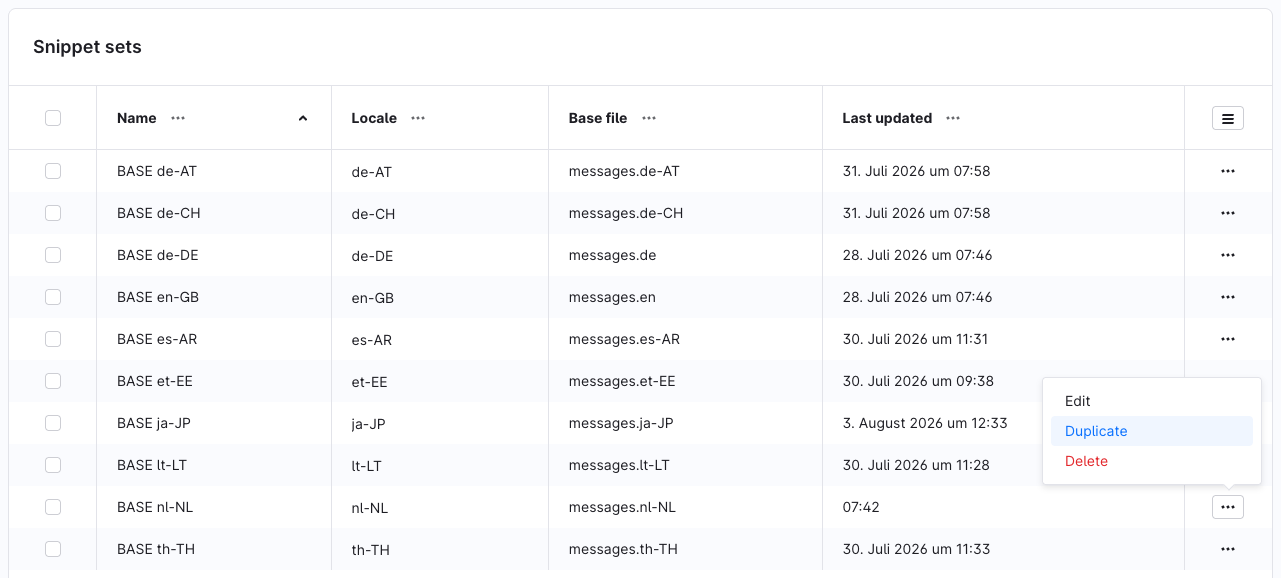
You can then translate or edit the individual snippets in the desired language. Any texts that you do not translate immediately will initially remain in the language of the duplicated set.
In the snippet overview, you can select one or more languages and edit their snippets side by side.

You can also search the Extension Store for language packs that provide additional translations for your desired language.
Community translations
Shopware is supplied with German (de-DE) and British English (en-GB). For all other languages, translations of the system texts are not part of a Shopware release. They are maintained by the community on translate.shopware.com and provided separately for each language.
When you add such a language, the available translations are installed along with it.
Once installed, these translations remain up to date automatically. A scheduled task regularly checks whether a newer version of the community translations is available and downloads it in the background. This keeps your shop up to date without requiring any manual action.
You can manage these languages under Settings > Localisation > Languages.
Machine translations and responsibility
On translate.shopware.com, the system texts are translated by the community. The texts are initially pre-filled using machine translation and are only considered reviewed after a community member has checked them. Their correctness, accuracy, and completeness may therefore vary between languages.
shopware AG is only responsible for the translations of the two included languages: German (de-DE) and British English (en-GB). Translations for all other languages are provided and maintained by the community. shopware AG therefore does not guarantee their accuracy.
Would you like to help? You can contribute on translate.shopware.com. Create a free Crowdin account, join the Shopware project, and translate or review the system texts for your language. Approved translations are automatically delivered to your shop through the updates described above.
Individual texts
In addition to fixed snippets, many areas of the shop contain individual texts that also need to be translated. These may include product names, shipping method names, payment method names, description texts, or Shopping Experiences.
Languages
For individual texts, Shopware uses the configured languages. You can find them in the Administration under Settings > Localisation > Languages.
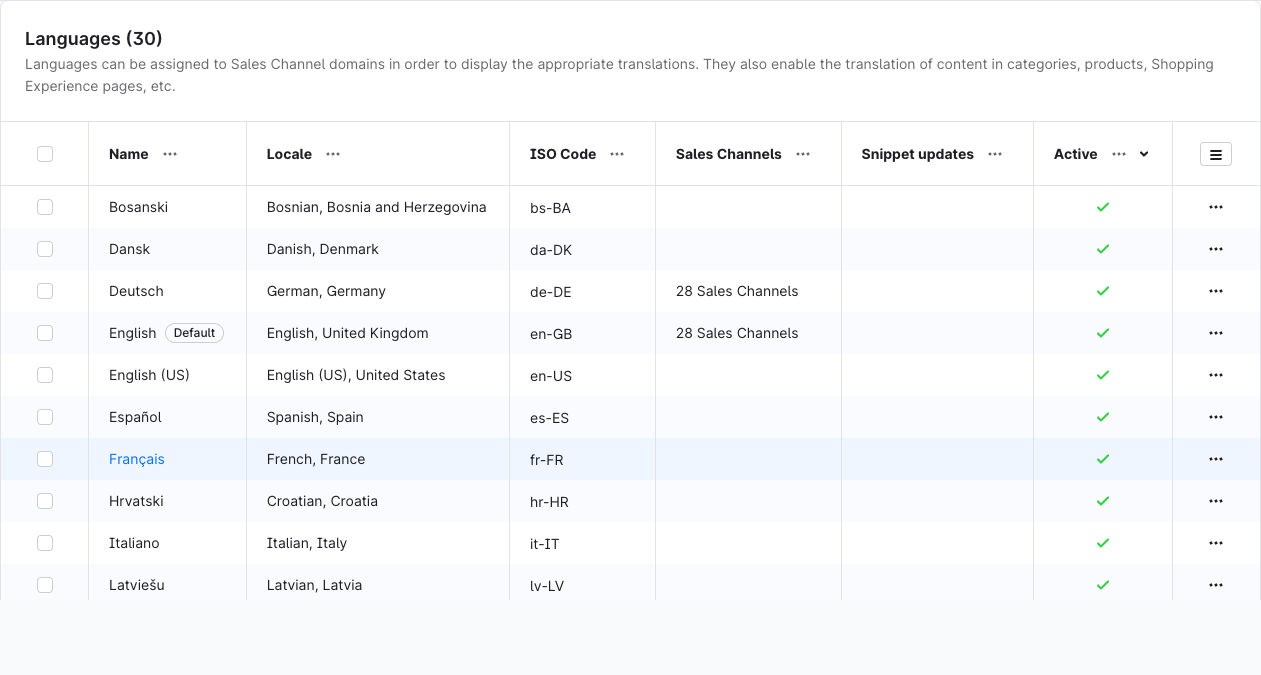
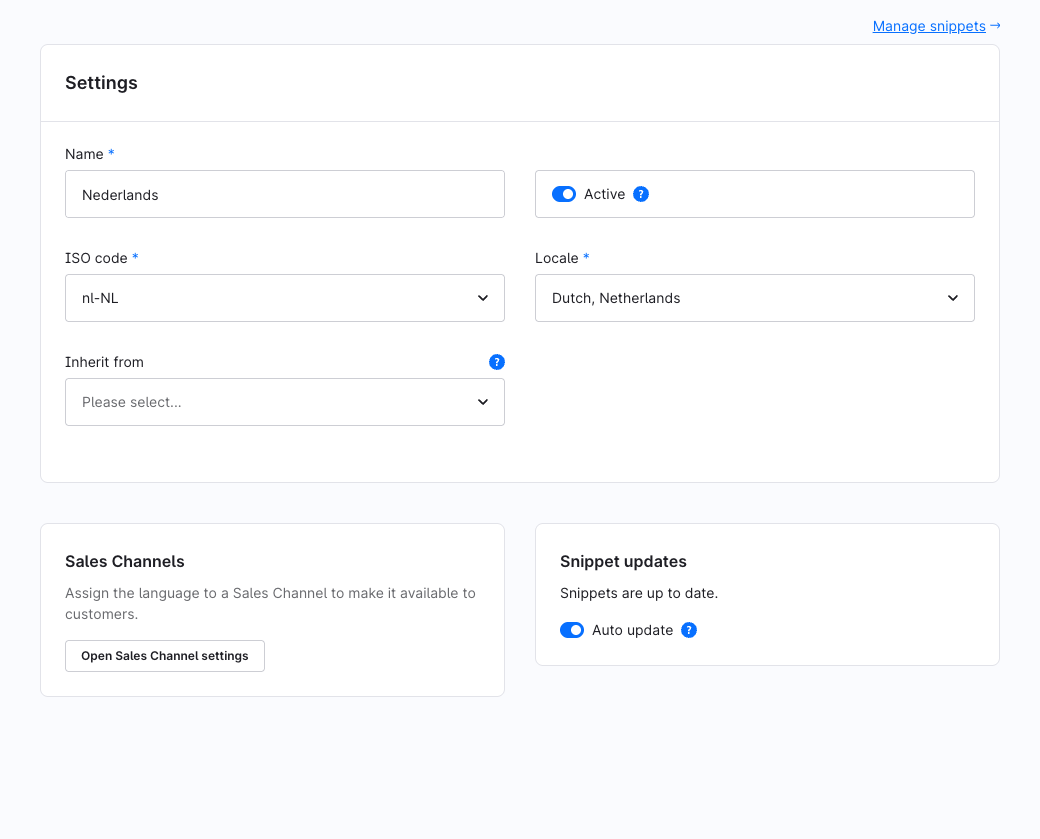
English and German are preconfigured by default. You can add additional languages, such as Dutch in this example, by selecting Create language.
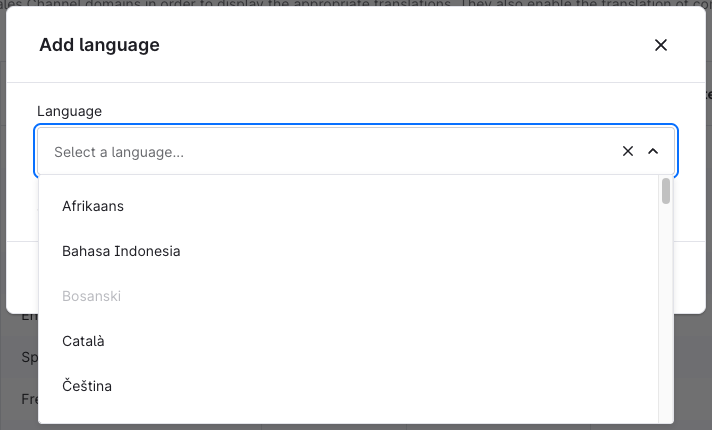
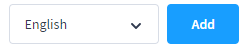
In the Shopware Administration, a language selector is displayed at the top of every area in which translations are available.
Product translation example
The following example shows how to create translations for a product. First, open the product overview and select the language in which the product was originally created from the language selector in the upper-right corner.

Open the product that you want to edit.

In the product details, change the language selection at the top to the language into which you want to translate the product texts.

The selected language version of the product is then displayed. You can now translate all fields into the target language.
When creating the language, you selected an inheritance language. As long as a field has not yet been translated, the content inherited from that language is displayed in slightly grayed-out text.